
Business Scenario
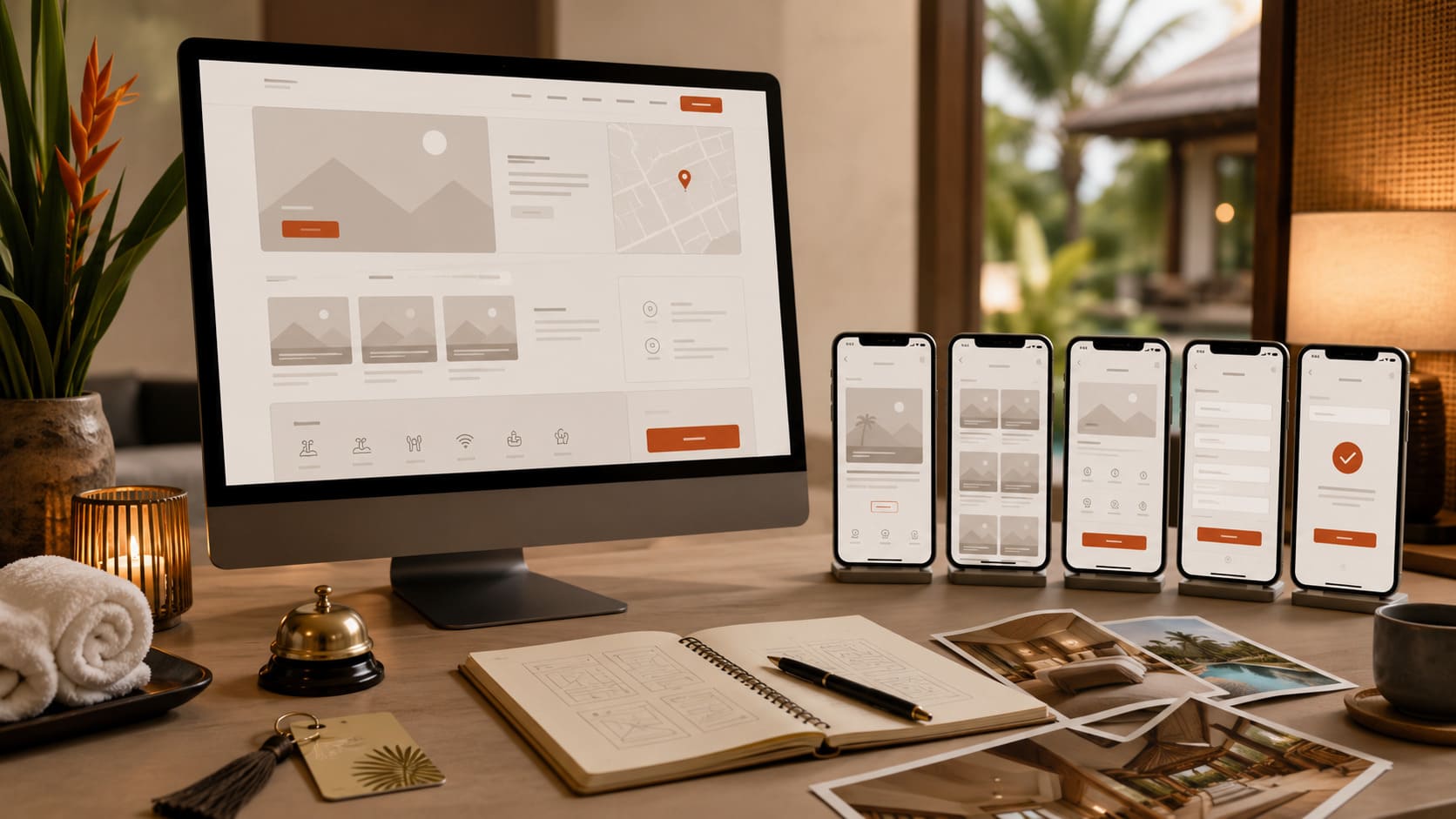
A boutique-to-mid-size hotel in Malaysia was attracting visibility through OTA listings, search traffic, and occasional social campaigns, but the official website was not contributing enough to direct revenue. Guests were finding the property, but too many of them still returned to OTA platforms to complete the booking.
The hotel served a mixed guest base that included domestic leisure travellers, regional weekend visitors, and business travellers who wanted quick clarity before making a decision. Occupancy was being supported by third-party channels, but direct booking remained weak enough to limit profitability and customer ownership.
Current Challenges
Hotels in Malaysia are dealing with a more demanding booking environment in 2026. Many properties still rely too heavily on Agoda and Booking.com, direct booking rates remain weaker than they should be, and the official hotel website often does too little to build trust or guide the guest toward a booking decision. That creates a difficult mix of high commission cost, low brand control, and too much dependence on third-party channels.
OTA commission was eroding booking value
With commission often falling between 15% and 25%, every booking pushed through an OTA reduced the margin the hotel could keep.
The direct booking rate stayed too low
The hotel website existed, but it was not strong enough to persuade enough guests to complete the reservation directly.
The website was not building enough trust
Visitors could see photos, but room categories, rate logic, and the property experience were not explained clearly enough to support direct booking confidence.
The booking journey felt unclear on mobile
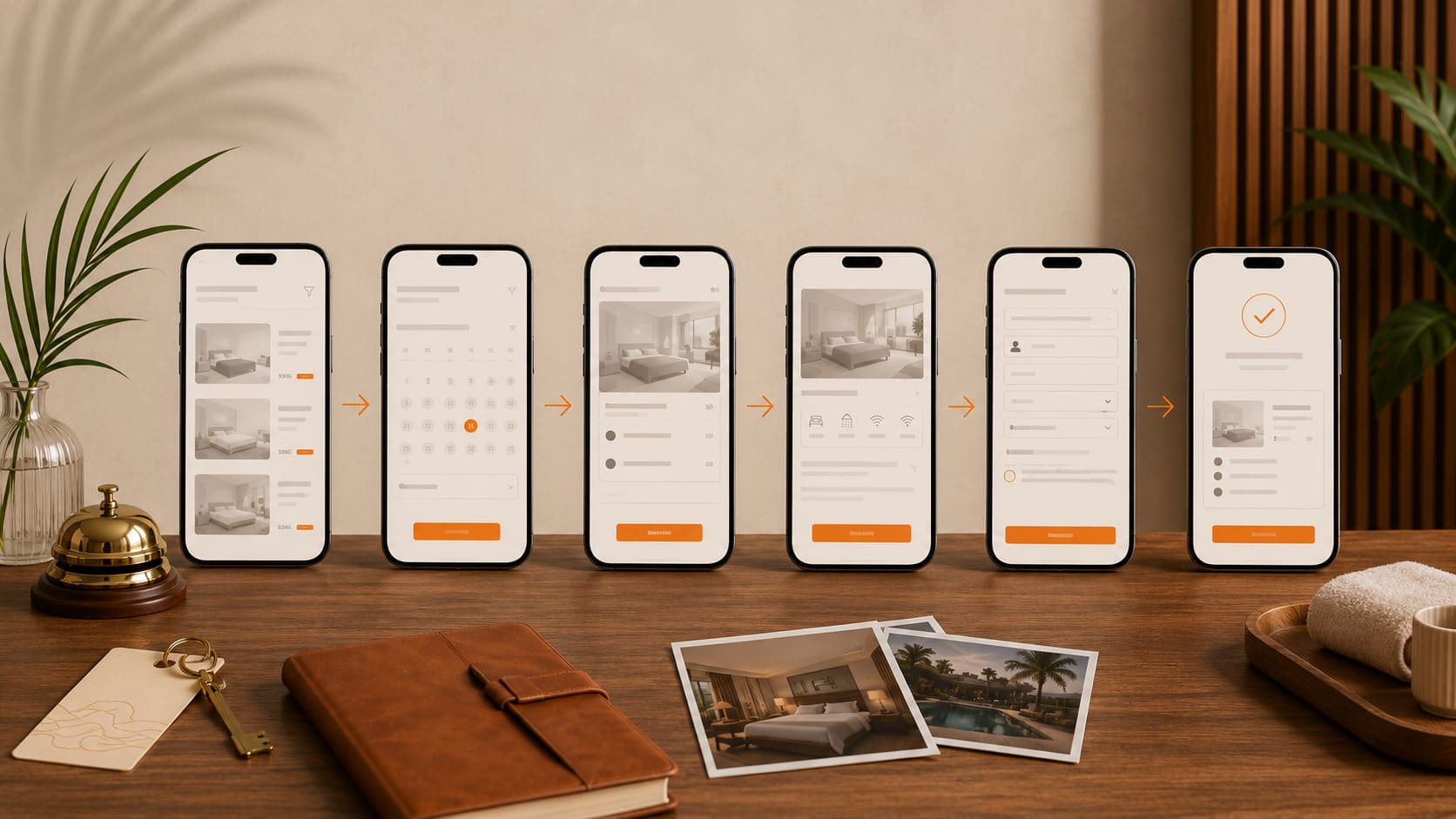
Because many guests compare hotels on their phones, any friction around room discovery, availability checks, or next-step buttons made it easier to abandon the official site.
Guests were comparing several hotels before deciding
In a crowded market, travellers move between OTA listings, maps, reviews, and hotel websites quickly. If the official website does not help them decide, it becomes only a validation stop instead of a booking channel.
Website Booking Strategy
The hotel website needs to make booking feel straightforward from the first few seconds. That begins with clearer room categories, stronger visual hierarchy, and an early path toward Book Direct or Check Availability before users get distracted by too much scrolling.
Rather than relying on beautiful imagery alone, the site should combine visuals with fast answers: what room types exist, who the property suits best, where it is located, and what the booking next step looks like. That same structure issue is explored further in why most hotel websites in Malaysia fail to generate direct bookings, especially where weak layout and mobile friction reduce conversion.
Case study visual sequence
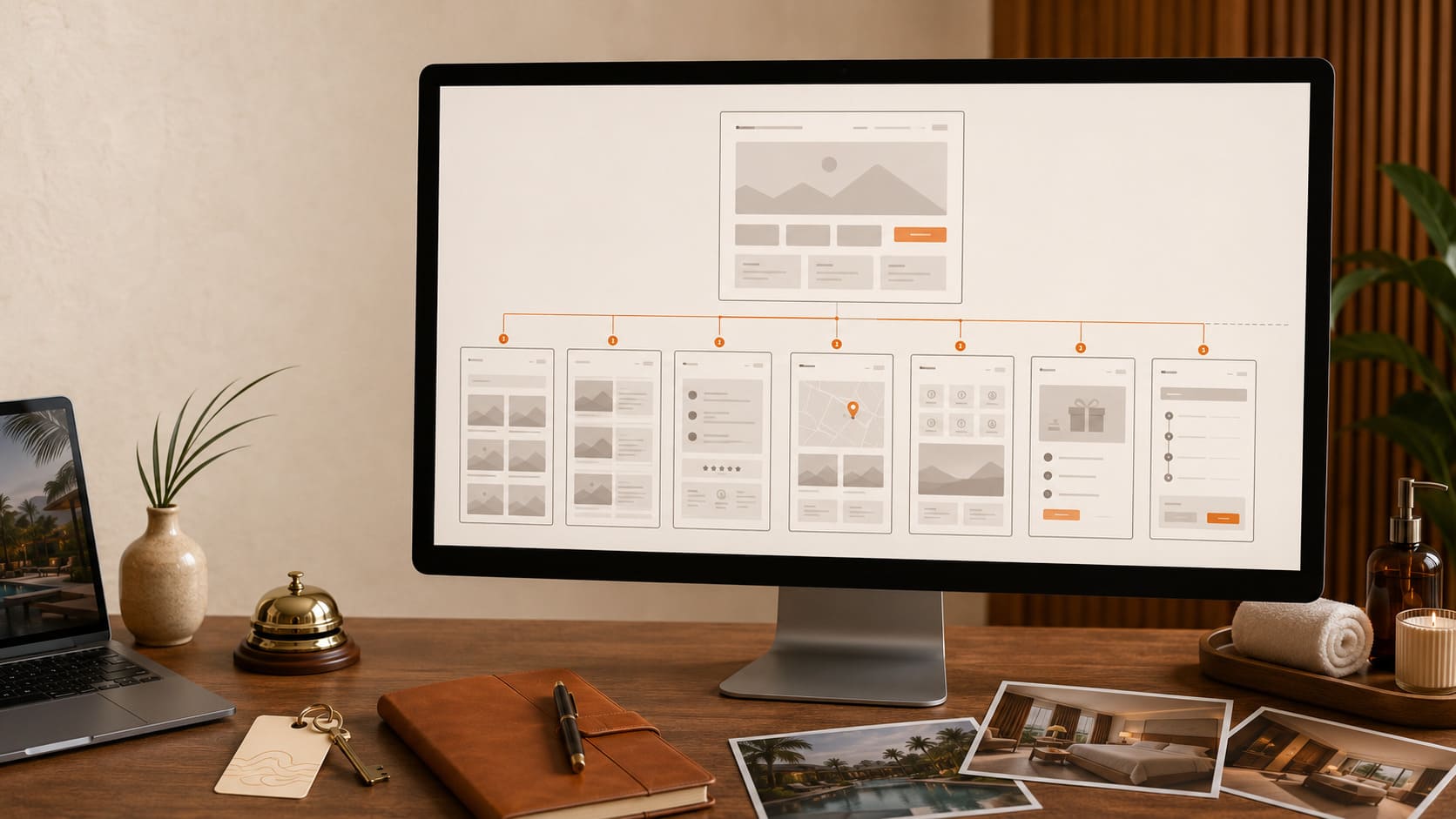
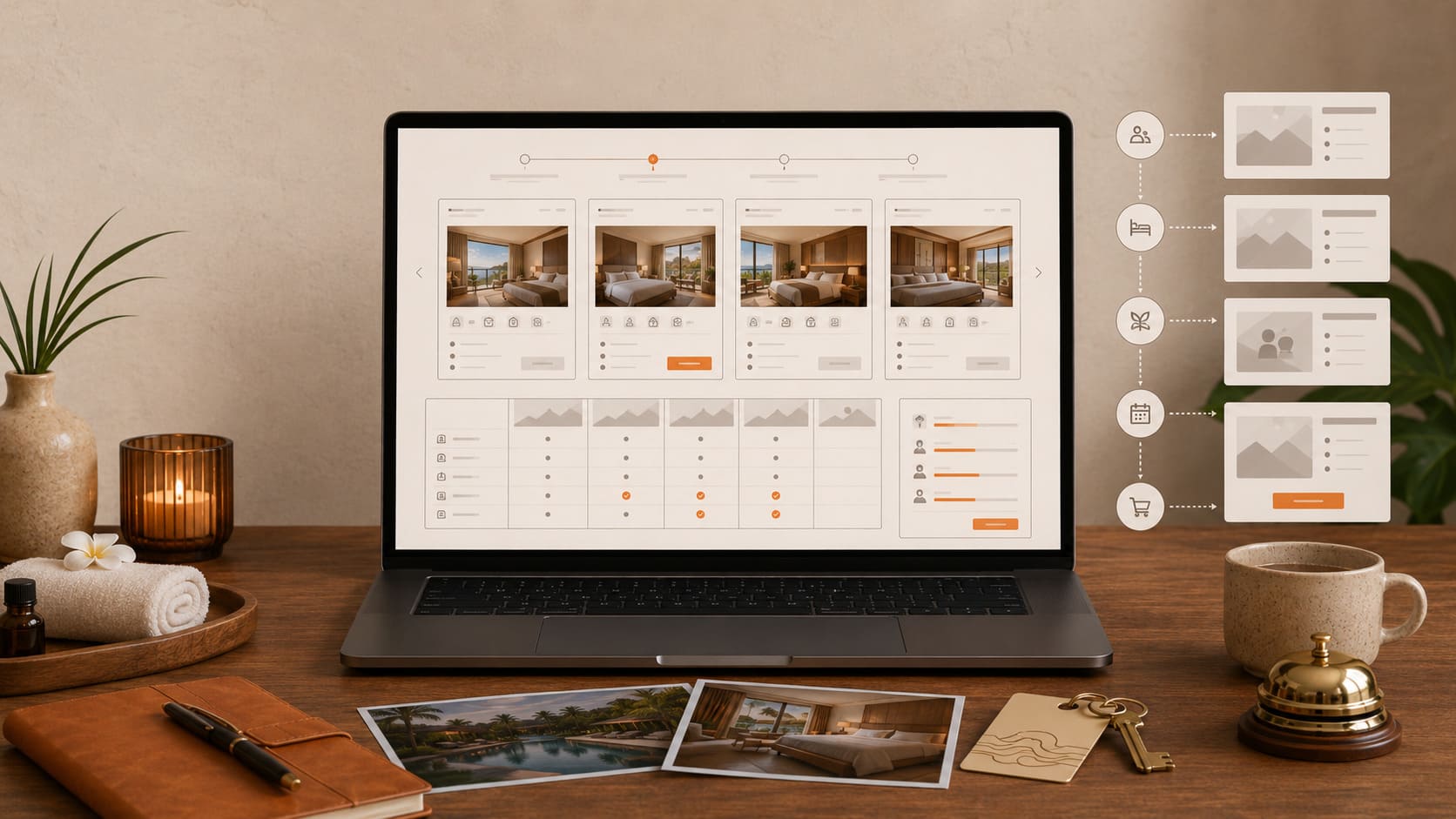
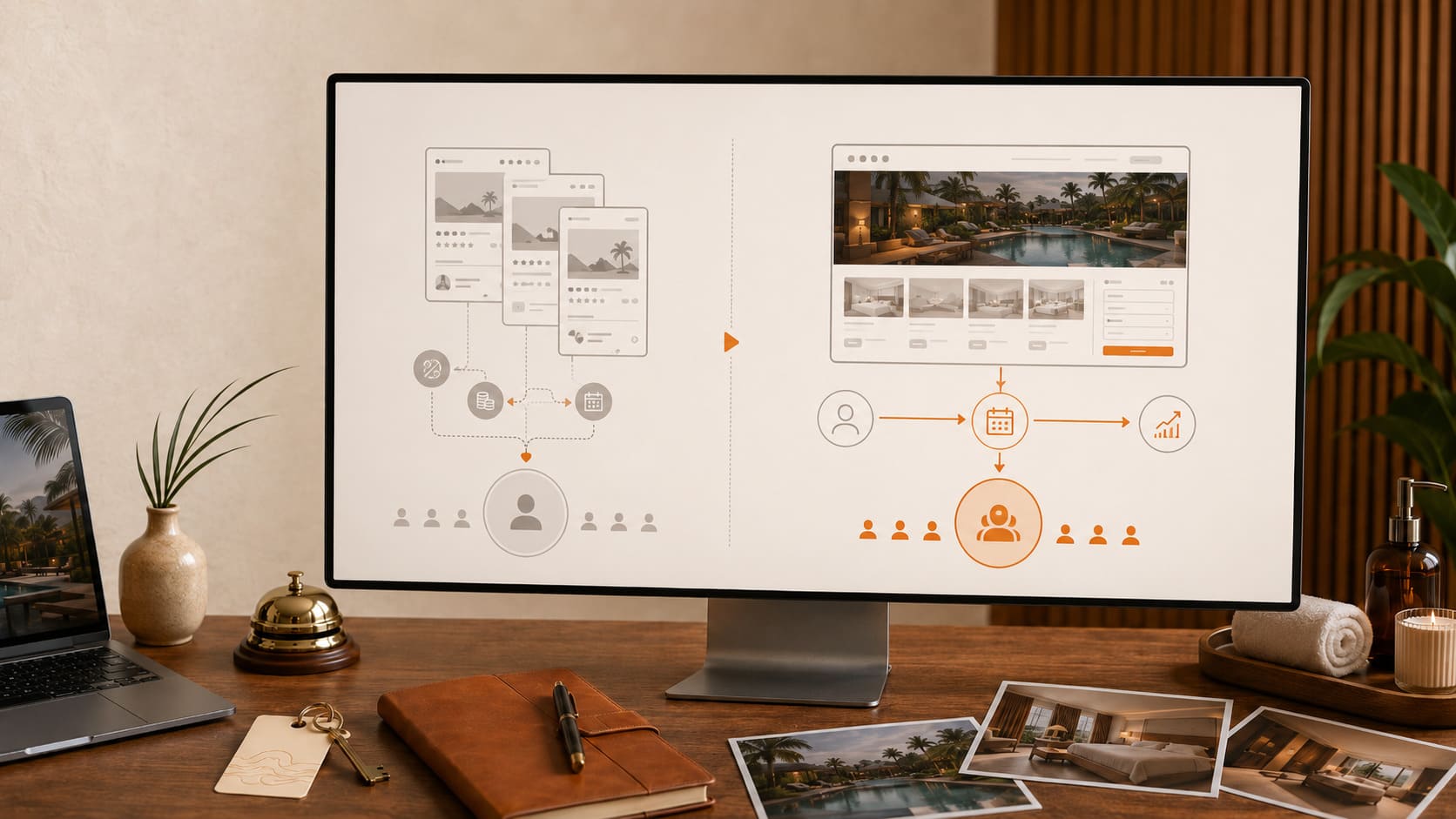
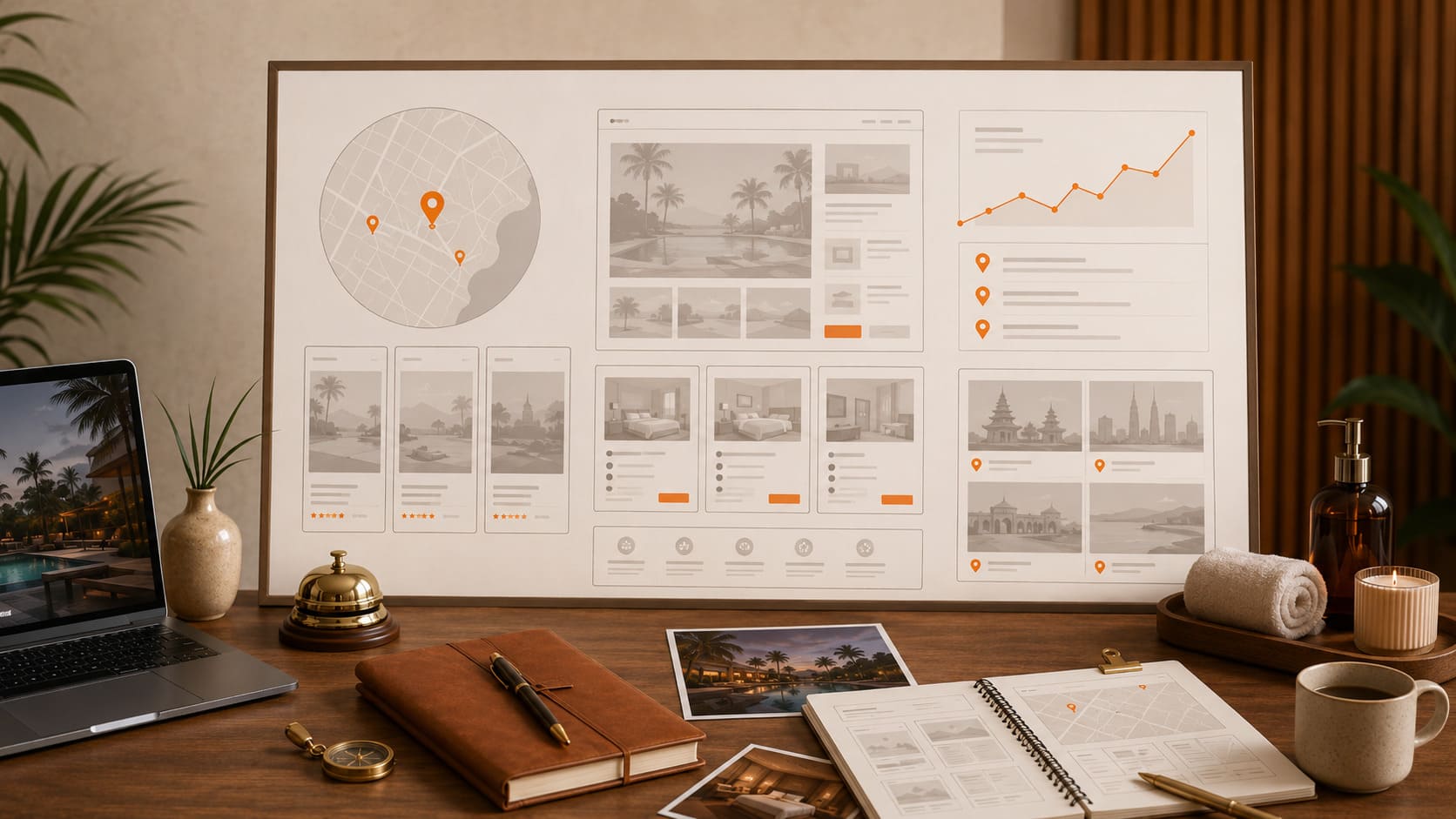
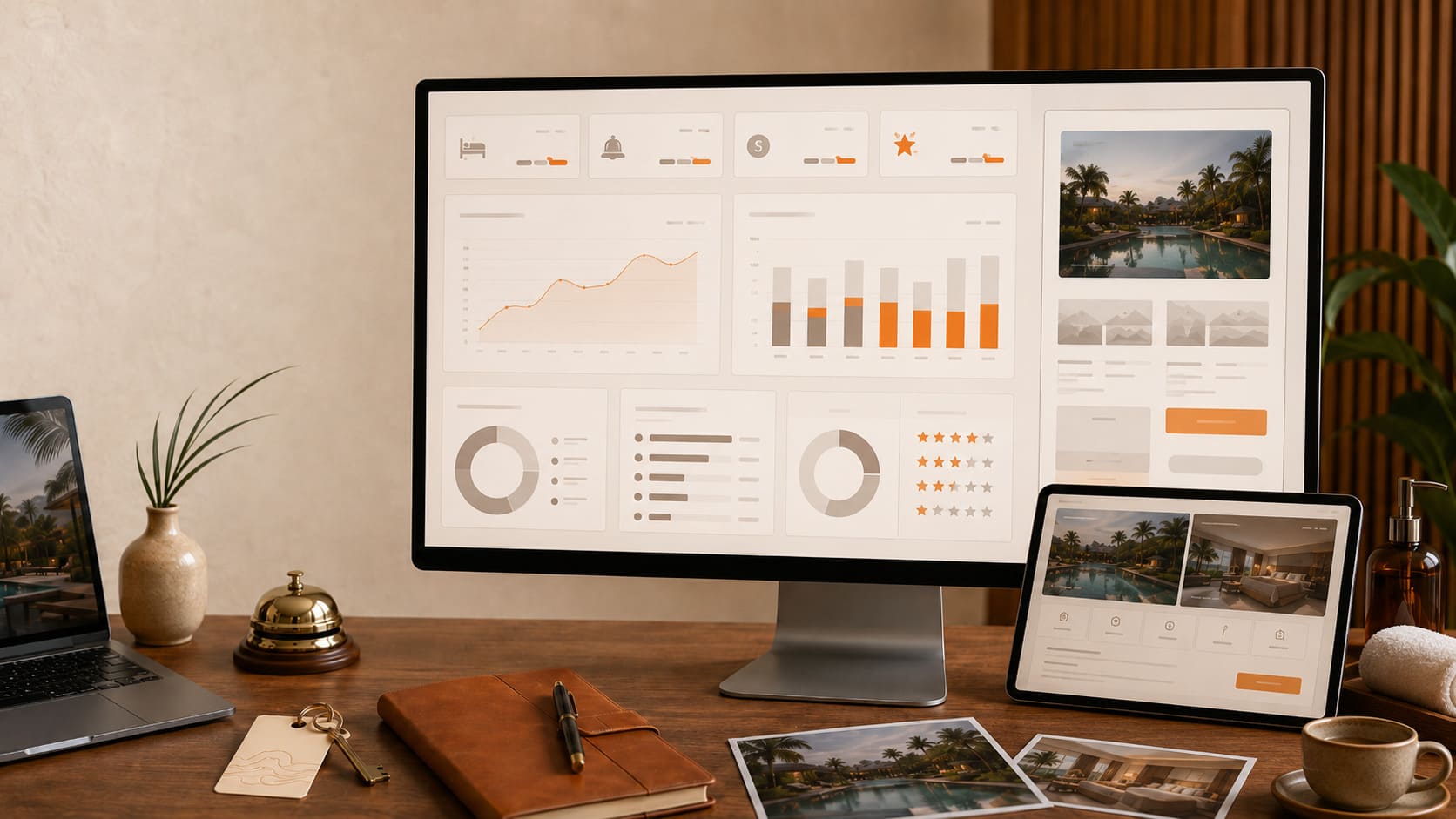
The following slide sequence shows how a hotel website can move from broad property presentation into clearer room discovery, mobile direct booking, OTA-to-direct strategy, location visibility, and revenue performance.
SEO & Visibility Strategy
Search visibility for hotels in Malaysia depends heavily on location intent and booking context. Guests often search using patterns such as hotel in [location], boutique hotel near [area], or resort near [landmark] while they compare options side by side.
For a hotel website Malaysia strategy to work properly, the website needs more than a homepage and booking engine. It should include clearer landing pages, location-led messaging, and supporting content that helps the property appear in searches tied to nearby areas, travel occasions, and stay expectations.
That might include keyword directions such as hotel website Malaysia, direct booking hotel Malaysia, boutique hotel KL, or hotel SEO Malaysia, but the real value comes from how well the page matches the guest's decision intent. That is also why SEO strategy for hotels in Malaysia should be built around search intent and discovery paths, not just broad hotel keywords.
Conversion Strategy
Direct booking improves when the website reduces hesitation at key moments. Stronger calls to action such as Book Direct or Check Availability should appear early and continue at points where guests have just seen room types, guest benefits, or trust signals.
Trust matters here. Clear room photos, review snippets, better property summaries, cancellation information, and visible location context all help the guest decide whether the official site feels dependable enough to use. The website should not feel like a brochure. It should feel like the easiest place to confirm the stay.
Revenue Strategy
The goal is not to remove OTAs entirely. OTAs still play a useful role in discovery and base occupancy. The real opportunity is to balance OTA reach with a stronger direct channel that protects margin and gives the hotel more ownership of the customer journey.
When more guests book through the official website, the hotel gains more control over revenue per booking, more flexibility to promote direct-only value, and a stronger long-term relationship with the guest after the stay. The guest side of that decision is closely connected to how guests decide between OTA and direct hotel booking, where price, trust, and convenience all influence the final choice.
Expected Results
With a clearer hotel website structure and a stronger direct-booking path in place, the property could realistically expect:
- higher direct booking intent from guests already comparing the hotel seriously
- better revenue per booking through reduced dependence on OTA commission
- stronger guest confidence before the booking step
- more ownership of guest data and post-booking communication
- a healthier balance between third-party visibility and official website revenue
Why It Matters
A hotel website is no longer just a place to showcase the property after the guest has already decided. It is part of the booking decision itself. When the website supports trust, clarity, and a simpler next step, it stops behaving like a brochure and starts working like a revenue engine.